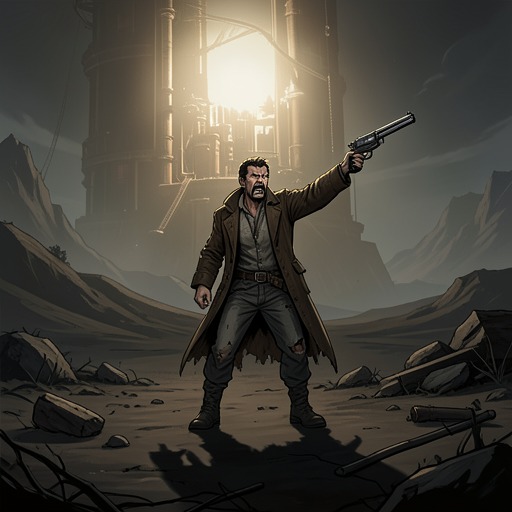
Clan Elder Klo Tornok
Systema Delenda EstClan Elder Klo Tornok is a High Azoth, one of the three elders who anchor, govern, and effectively own Clan Tornok. His decisive narrative function is to represent the clan’s concentrated authority at the moment that authority becomes vulnerable: although his rank gives him immense power and multiple lives, Dyen’s preparation, stealth, and shadow-based combat techniques allow a lower-ranked assassin to dismantle his defenses and destroy him permanently.
Position Within Clan Tornok
Clan Elder Klo Tornok stands alongside Clan Elder Chancre Tornok and Clan Elder Nomok Tornok as one of the three figures who matter most to the clan. The elders do more than formulate policy. They own the clan, and their continued existence preserves the benefits that the System accords to it. If they fall, Clan Tornok may not formally dissolve, but it loses virtually all of the advantages attached to its status. Klo is therefore not merely a powerful individual; he is one of the structural supports holding the entire political order together.
The trio is encountered during a crisis already marked by disorder. Lower-ranked servants move through the estate with little energy, some attending routine duties and others pilfering from their masters after seeing the dead Bismuths do the same. Gossip spreads among people who are either unaware of Tornok’s inevitable end or no longer care to resist it. Against that atmosphere of exhausted loyalty, Klo’s High Azoth status makes him the strongest immediate symbol of the clan’s remaining authority.
Dyen’s Target and the First Attack
Dyen comes to the estate with a precise objective: the deaths of Klo, Chancre, and Nomok. He regards the three elders as ultimately responsible for his wife’s death, the derailment of his life, and the chain of events that followed. His resentment is not simple ignorance of his own complicity; he acknowledges that Cato also bears responsibility, but Dyen considers the elders the central authors of the injury he seeks to repay. Klo is selected first because a High Azoth can bring an especially dangerous level of power to the fight, even though Chancre may be the more experienced combatant.
Dyen enters through estate security designed to conceal and protect the signatures of those inside. Once past it, he identifies the elders and studies them from the shadow of an indoor fountain. His preparation exploits a weakness in the trio: unlike Raine and Leese, whose Domains are dense, perfectly controlled, and dangerous to approach, the elders hold their power carelessly. Dyen allows his Domain to advance into and surround their power without alerting them, turning their confidence and lack of discipline into an opening.
He then uses crystals from his Estate-inventory to obtain brief combat boosts. Such temporary enhancements are rarely valuable in prolonged Azoth battles, where fights against creatures or dungeon opponents can last much longer than the crystals’ effects. For an assassin, however, a few seconds of heightened speed and precision are decisive. Dyen draws a growth weapon shaped like a long black knife, something resembling a hole into a dark dimension rather than an ordinary physical blade, and moves through his Domain without relying on conventional movement or stealth Skills.
Dyen surfaces directly behind Klo and drives the dagger into the narrow gap between the elder’s protective gorget and his Azoth-rank robes. The strike penetrates Klo’s stone-affinity flesh without truly touching it, tears through his spine, and sends additional Skills into the wound. Those Skills do more than damage the body: they invade Klo’s Domain with corrosive shadow and disrupt his control over Skills and essence. Klo’s body collapses inward in an almost silent swirl of shadow, but the attack does not yet end his life. Like the other elders, Klo possesses multiple lives and can return through resurrection.
Resurrection and Final Destruction
Dyen immediately invokes Unstoppable Pursuit, a Skill chosen specifically for dealing with Azoths. Rather than allowing Klo’s essence to escape toward its resurrection point, the Skill attaches Dyen to the essence as it travels back through the world. Before following, Dyen also throws tracking darts into the shadows of Chancre and Nomok, ensuring that the surviving elders can be found again wherever they reappear.
Klo reconstructs himself within seconds. He brings out a massive stone pole and surrounds his body with an obsidian shell, recovering the outward defenses expected of a High Azoth. Dyen, however, uses the interval to dismantle the estate’s protective shields and enhancements. Klo attempts to summon those supports after reforming, only to discover that they are gone. His frustration becomes destructive force: when he swings the stone weapon, the near city-sized estate explodes into shrapnel without regard for anyone still inside. Dyen’s incorporeal state leaves him largely unaffected, allowing him to treat the devastation as cover rather than danger.
The contest then shifts from physical defense to Domains. Dyen focuses his own Domain on the hardiness of Klo’s earth-based power, infiltrating it with shadow and crumbling it from within. He emerges from the shadow of a cloud amid the falling wreckage and drives the dagger through Klo’s neck in exactly the same place as before. The attack moves with a speed that should have been impossible for a Low Azoth. Klo’s body detonates, and the two Domains briefly grapple, but the elder’s earth affinity cannot answer Dyen’s insidious, ephemeral assault. Klo’s remnants are drawn into shadow and destroyed; Dyen registers the death message and vanishes before Chancre and Nomok can respond.
Consequences and Narrative Significance
Klo’s death is both an assassination and a political severing. Because the three elders collectively anchor Clan Tornok’s ownership, policy, and System privileges, his destruction removes one of the clan’s essential supports. The scene therefore converts an already visible atmosphere of decline into a concrete loss of power. Servants may still move through the estate, and the clan may not instantly disappear, but the authority that once made those routines meaningful has been materially weakened.
The method of Klo’s defeat creates the scene’s central reversal. Conventional expectations favor the High Azoth: Klo has the superior rank, multiple lives, stone-affinity durability, an obsidian shell, a massive weapon, and access to estate protections capable of surviving extraordinary violence. Dyen wins by refusing a conventional contest. He studies the elders before striking, uses short-lived crystals at the exact moment they matter, attacks through the Domain rather than across open space, disables protections before confronting Klo a second time, and destroys the resurrection process itself. Klo’s apparent durability becomes irrelevant because Dyen’s Skills target internal control, essence, and resistance instead of trying to overpower stone with greater force.
The sequence also completes one stage of Dyen’s revenge against the Tornok elders. He has come not to negotiate policy or expose their crimes through argument, but to make the people he holds responsible watch their structure fail one member at a time. Klo is the first chosen victim, while Nomok is deliberately reserved for last because Dyen believes he is most likely to have sent agents to Sydea. Klo’s fall thus serves as proof of method and as psychological pressure on the remaining elders: the clan’s strongest defenses can be entered, dismantled, and turned against them before they understand the attack.
Klo’s role is consequently defined by the tension between institutional power and individual vulnerability. He is powerful enough to destroy an estate in a single frustrated blow, yet insufficiently attentive to prevent Dyen from preparing inside his own Domain. He returns from death, but resurrection merely gives Dyen another opportunity to follow and finish him. His final destruction demonstrates that, within this conflict, rank is not equivalent to security. The clan’s hierarchy survives only while its anchors can defend themselves, and Klo’s eradication shows that those anchors have already become targets rather than foundations.